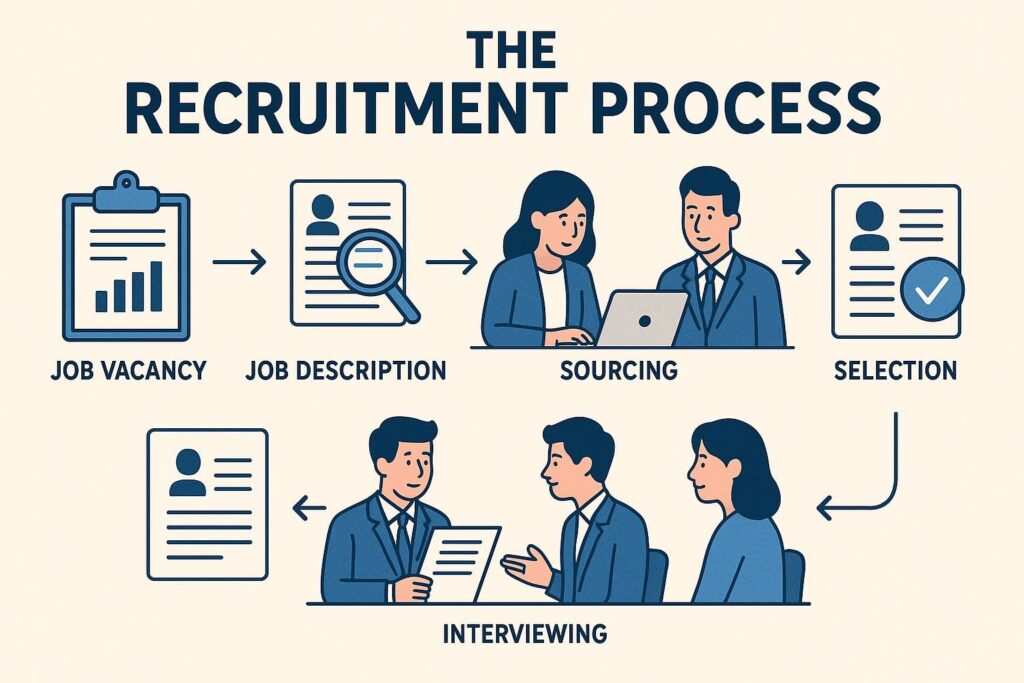
Recruitment is not just about filling vacancies, it’s about hiring the right candidate at the right time. In my current HR role, I follow a structured end-to-end recruitment process that ensures efficiency, quality hiring, and a smooth candidate experience.
Requirement → Sourcing → Screening → Interview → Selection → Offer → Onboarding
The end-to-end recruitment process is a complete hiring lifecycle followed by HR professionals to attract, evaluate, hire, and onboard the right candidates for an organization. It begins with identifying a hiring requirement and ends with successful employee onboarding.
A structured end-to-end recruitment process helps companies hire qualified candidates efficiently, reduce hiring delays, improve candidate experience, and support long-term employee retention.
The recruitment lifecycle typically includes the following stages:
The end-to-end recruitment process starts with discussing requirements with the hiring manager:
👉 This step avoids confusion later and ensures alignment.
A clear JD helps attract relevant candidates. I include:
I use multiple sourcing channels:
👉 Using multiple sources increases the chances of finding quality candidates
Initial screening includes:
📌 I usually filter candidates based on:
Once shortlisted:
👉 A smooth scheduling process improves candidate experience.
The interview process may include:
I use a simple evaluation sheet:
After selection:
📌 Important: Always keep a backup candidate ready.
Before releasing the offer letter, companies may conduct:
This helps ensure authenticity and reduces hiring risks.
This step is often ignored but very important:
👉 Helps reduce offer dropouts.
On the joining day:
Modern HR teams also monitor employee progress after joining through:
This ensures successful integration into the organization.
A structured end to end recruitment process helps organizations:
For HR professionals, an organized end-to-end recruitment process workflow also improves coordination between recruiters, hiring managers, and leadership teams.
👉 Solution: Strong follow-up and clear communication at every stage.
To measure recruitment effectiveness, HR teams monitor key hiring metrics.
Measures the total time taken to fill a position.
Calculates recruitment expenses per employee hired.
Evaluates employee performance and hiring success.
Tracks how many selected candidates accept offers.
Measures long-term hiring effectiveness.
Identifies the best-performing recruitment channels.
These metrics help HR teams improve hiring strategies and recruitment efficiency.
Technology has transformed the recruitment industry significantly.
Technology improves:
Modern HR professionals increasingly rely on automation to streamline repetitive recruitment tasks.
The end-to-end recruitment process is much more than simply filling vacancies. It is a strategic HR function that directly impacts organizational growth, employee performance, and business success.
A structured recruitment lifecycle helps companies:
For HR professionals, mastering the recruitment process is essential for building strong, productive, and future-ready teams.
Organizations that continuously improve their hiring strategies, adopt modern recruitment technologies, and focus on candidate experience are more likely to succeed in today’s competitive talent market.