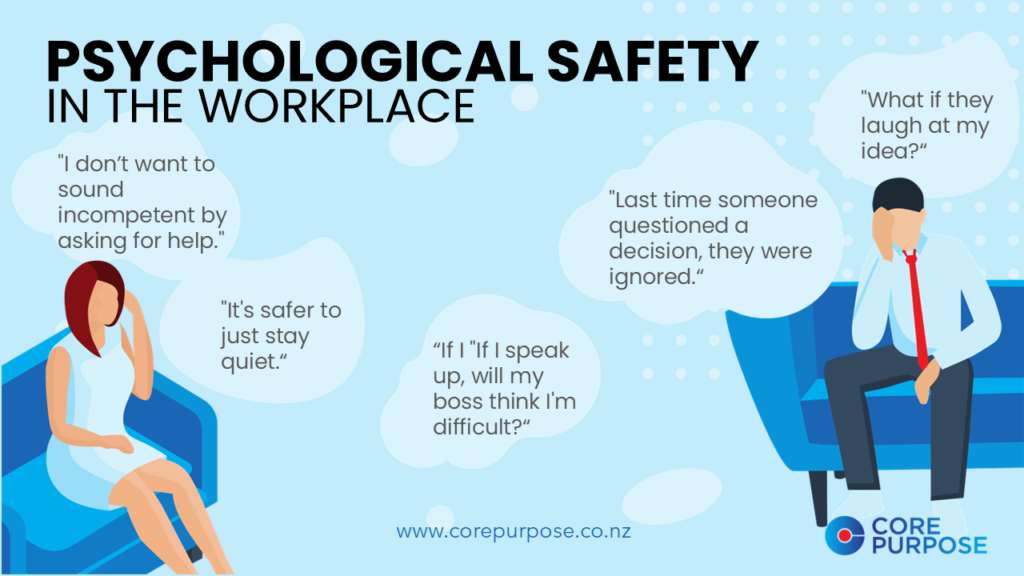
Modern workplaces are no longer focused solely on productivity and profits. Organizations are increasingly recognizing that employees perform at their best when they feel respected, heard, and valued. This is where psychological safety in the workplace becomes a critical factor.
Psychological safety refers to an environment where employees feel comfortable expressing their opinions, asking questions, sharing ideas, admitting mistakes, and providing feedback without fear of embarrassment, punishment, or retaliation. Teams with high psychological safety are more innovative, collaborative, and resilient because individuals are encouraged to contribute their unique perspectives.
Whether you’re a business owner, HR professional, manager, or team leader, creating a psychologically safe workplace is essential for long-term organizational success. In this guide, you’ll learn what psychological safety means, why it matters, its benefits, practical examples, and proven strategies for building it within your organization.
Psychological safety in the workplace has become a top priority for organizations adapting to changing work environments, remote collaboration, and diverse teams. Employees want to work in organizations where they can express ideas freely, ask questions without hesitation, and admit mistakes without fear of blame. Companies that invest in psychological safety in the workplace often experience stronger employee engagement, higher retention rates, and better overall performance. As businesses continue to evolve, creating a culture of trust and openness is no longer optional it’s a competitive advantage.
Psychological safety in the workplace is the shared belief among team members that they can take interpersonal risks without fear of negative consequences. Employees feel confident speaking up, asking for help, suggesting new ideas, or admitting mistakes because they know they will be treated with respect rather than criticism.
A key characteristic of psychological safety in the workplace is mutual respect among team members. Employees know their opinions will be considered fairly, even when others disagree. This encourages healthy discussions, faster problem-solving, and continuous learning. Rather than avoiding difficult conversations, teams with psychological safety in the workplace address challenges openly and work together to find effective solutions.
Unlike job security, psychological safety is about emotional security. It doesn’t mean avoiding accountability or lowering performance standards. Instead, it creates an atmosphere where employees can learn, grow, and improve without fear of humiliation.
For example, imagine two different workplaces. In one, employees hesitate to question leadership because they fear being judged. In the other, employees openly discuss concerns, challenge ideas respectfully, and collaborate on solutions. The second workplace demonstrates psychological safety.
A psychologically safe workplace encourages:
When people know their voices matter, they become more engaged and invested in organizational success.
Organizations that prioritize psychological safety often experience stronger teamwork, better employee satisfaction, and improved business outcomes. Employees who feel psychologically safe are more likely to contribute ideas, identify potential risks early, and collaborate effectively across departments.
Open communication is the foundation of every successful workplace. Employees who feel safe sharing their thoughts are more likely to discuss challenges before they become major problems. This transparency leads to faster problem-solving and better decision-making.
Engaged employees are emotionally invested in their work. When individuals know their opinions are respected, they become more motivated to participate in meetings, contribute innovative ideas, and support organizational goals.
Innovation thrives when employees are comfortable experimenting with new ideas. Fear of failure often discourages creativity, while psychological safety encourages calculated risk-taking and continuous improvement.
Teams perform better when members trust one another. Psychological safety removes communication barriers, allowing employees to ask questions, seek clarification, and share expertise without hesitation.
Strong leaders create environments where every employee feels included. By encouraging transparency and respectful dialogue, leaders build trust that strengthens organizational culture.
Companies that foster psychological safety also find it easier to implement initiatives such as employee development programs and goal setting frameworks, because employees are more willing to discuss challenges, set realistic objectives, and collaborate toward shared outcomes.
Creating a psychologically safe workplace benefits employees and organizations alike. Here are some of the most significant advantages.
Employees who constantly fear criticism or blame experience higher stress levels. Psychological safety reduces workplace anxiety by creating an environment where individuals feel respected and supported.
When employees experience less stress, they tend to have higher job satisfaction and better overall mental well-being.
People are more likely to stay with organizations where they feel valued. A workplace built on trust and respect reduces turnover because employees develop stronger emotional connections with their teams and leaders.
Replacing talented employees is expensive, making psychological safety an important strategy for retaining top performers.
Good decisions require diverse viewpoints. Psychological safety encourages employees to voice concerns and offer alternative perspectives, reducing the risk of poor decisions caused by groupthink.
Teams that openly discuss different opinions often identify better solutions than teams where only a few voices are heard.
Innovation requires experimentation, and experimentation naturally involves mistakes. When employees know that mistakes are treated as learning opportunities rather than failures, they become more willing to propose creative ideas.
Many breakthrough innovations begin with employees who feel confident enough to challenge existing processes.
Trust forms the foundation of every high-performing team. Psychological safety strengthens relationships by encouraging empathy, respect, and honest communication.
As trust grows, collaboration becomes more effective, conflicts become easier to resolve, and teams become more resilient during periods of change.
Employees spend less time worrying about workplace politics or avoiding criticism when psychological safety exists. Instead, they focus their energy on solving problems, collaborating with colleagues, and achieving organizational goals.
This increased focus often leads to higher productivity and improved business performance.
Organizations that embrace psychological safety encourage employees to ask questions, seek feedback, and admit when they don’t know something.
Rather than hiding weaknesses, employees actively pursue learning opportunities, leading to continuous professional development throughout the organization.
Understanding psychological safety becomes easier when you see how it looks in everyday workplace situations. Below are practical examples that demonstrate how psychologically safe teams operate.
During a brainstorming meeting, every team member is encouraged to contribute ideas regardless of their job title or level of experience. Instead of dismissing suggestions immediately, the team discusses each idea respectfully.
Example: A junior marketing executive proposes a new social media campaign. Rather than ignoring the suggestion because of the employee’s limited experience, the manager encourages discussion and evaluates its potential.
Mistakes are inevitable in any workplace. In psychologically safe organizations, employees can admit errors early so they can be corrected quickly instead of hidden.
Example: An employee notices incorrect data in a client report before it’s sent. They immediately inform their manager, and the team fixes the issue together instead of assigning blame.
Employees should never feel embarrassed for asking questions. Clarifying expectations leads to better performance and fewer misunderstandings.
Example: A new employee asks several questions during onboarding. Instead of being criticized, the manager appreciates their willingness to learn and provides detailed guidance.
Constructive feedback helps employees grow professionally. Psychological safety ensures feedback is delivered with respect and received as an opportunity for improvement.
Example: A designer receives feedback on a presentation. Instead of feeling attacked, they discuss the suggestions openly and improve the final version.
In healthy workplace cultures, leaders actively invite quieter employees to share their perspectives instead of allowing only the loudest voices to dominate conversations.
This inclusive approach improves decision-making and helps everyone feel valued.
Building psychological safety requires intentional effort from leaders, managers, and employees. It develops gradually through consistent behaviors that promote trust, respect, and accountability.
Leaders should create opportunities for employees to share opinions, ask questions, and discuss concerns without fear of judgment. Regular one-on-one meetings, team discussions, anonymous surveys, and feedback sessions can strengthen communication.
The key is listening actively and responding respectfully even when opinions differ.
Employees closely observe leadership behavior. When managers admit their own mistakes, ask for feedback, and demonstrate humility, they signal that learning is valued more than appearing perfect.
Leaders who model vulnerability make it easier for others to do the same.
Instead of asking, “Who is responsible?” start with, “What can we learn from this?”
Treating mistakes as learning opportunities encourages employees to report issues early, which often prevents larger problems later.
Healthy teams welcome diverse viewpoints while maintaining mutual respect. Encourage employees to challenge ideas not individuals.
Establish clear guidelines for respectful discussions so disagreements remain productive.
Recognition builds confidence and reinforces positive behaviors. Celebrate achievements, acknowledge creative ideas, and thank employees for speaking up during meetings.
Simple recognition can significantly improve engagement and trust.
Feedback should be timely, specific, and balanced. Employees should receive recognition for strengths as well as practical guidance for improvement.
Likewise, leaders should actively seek feedback from their teams and act on valuable suggestions.
Managers have a major influence on workplace culture. Training leaders in emotional intelligence, active listening, conflict resolution, and coaching skills helps create psychologically safe teams.
Organizations should view leadership development as a long-term investment rather than a one-time training session.
Even organizations with good intentions can struggle to create psychological safety. Identifying common barriers is the first step toward overcoming them.
Employees may hesitate to share ideas because they worry about negative reactions.
Solution: Encourage respectful discussions, acknowledge all contributions, and avoid dismissive responses.
When mistakes result in punishment rather than learning, employees become reluctant to report problems.
Solution: Shift the focus from blame to improvement by conducting constructive reviews after projects or incidents.
Leaders who interrupt, ignore feedback, or discourage questions can unintentionally create fear within teams.
Solution: Train managers to practice active listening, empathy, and transparent communication.
Without trust, employees often avoid taking risks or expressing honest opinions.
Solution: Build trust through consistency, fairness, confidentiality, and follow-through on commitments.
Organizations undergoing change often experience uncertainty, making employees less likely to speak openly.
Solution: Keep communication transparent, explain the reasons behind changes, and involve employees in decision-making whenever possible.
Psychological safety in the workplace is a culture where employees feel comfortable expressing ideas, asking questions, admitting mistakes, and providing feedback without fear of embarrassment, punishment, or retaliation.
It improves communication, strengthens teamwork, increases employee engagement, encourages innovation, supports learning, and contributes to higher productivity and employee retention.
Everyone plays a role, but leaders and managers have the greatest influence. Their communication style, decision-making, and response to mistakes shape the workplace culture.
Yes. Organizations with psychologically safe teams often experience better collaboration, faster problem-solving, increased innovation, and improved customer outcomes because employees feel empowered to contribute their best ideas.
There is no fixed timeline. Building trust takes consistent actions over time. Organizations that prioritize open communication, respect, and continuous learning usually see gradual improvements in employee engagement and collaboration.
Psychological safety in the workplace is more than a workplace trend it is a foundation for sustainable organizational success. Employees who feel safe sharing ideas, asking questions, and admitting mistakes are more engaged, innovative, and committed to achieving shared goals.
Creating this type of culture requires consistent leadership, respectful communication, and a genuine commitment to learning rather than blame. Organizations that invest in psychological safety benefit from stronger teamwork, improved decision-making, higher employee retention, and greater resilience during periods of change.
Whether you’re leading a small team or managing an entire organization, fostering psychological safety should be a strategic priority. By encouraging open dialogue, recognizing employee contributions, responding constructively to mistakes, and promoting trust, you can build a workplace where individuals and teams thrive.